Beyond Emergency Mode
Lessons from grassroots climate action in Leeds for COP30 in Belem
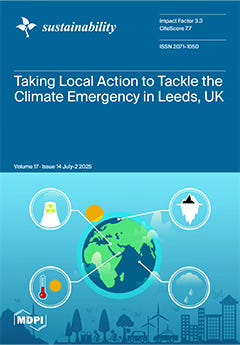
Right now, as I write, the world’s eyes are fixed on COP30 in Belém, the 30th UN climate summit taking place in Brazil’s Amazon—the gateway to the rainforest. This gathering marks three decades since global climate negotiations began back in 1995. Progress towards any meaningful change has been slow, and carbon emissions continue to rise year on year. As delegates and activists debate how we respond to what is increasingly an emergency situation, my recent work with Climate Action Leeds asks how do we move beyond emergency declarations to build real, lasting resilience on the ground? In this post, I summarise a recent article I wrote with my colleague Dr Stella Darby that was published in the journal Sustainability on place based action and the climate emergency.
The Climate Emergency: Powerful but Problematic
Over the past few years, we’ve all heard the phrase climate emergency so often that it’s become part of everyday language. Councils declare it, campaigners shout it, and headlines splash it across the news. But what does it really mean to act like it’s an emergency? And—here’s the harder question—what happens when the sense of urgency starts to fade?
With Stella Darby I’ve spent the last five years deeply involved in Climate Action Leeds, a citizen-led movement aiming to create a zero-carbon, socially just, nature-friendly city by the 2030s. Alongside colleagues, I’ve interviewed activists, councillors, entrepreneurs, and campaigners, and reflected on our own experiences. What we found might surprise you: the term climate emergency is both powerful and problematic. It can galvanise action, but it can also create panic, burnout, and even reinforce the very systems we’re trying to change.
So, what’s next? How do we move beyond emergency mode and build something lasting? Here are three big lessons we’ve learned in Leeds that might help anyone working for climate justice—whether in a city council office, a community hall, or your own kitchen.
1. Reframe the Emergency: It’s Bigger and Longer Than We Think
When Leeds declared a climate emergency in 2019, it felt like a breakthrough. Suddenly, what had seemed fringe—talking about climate breakdown—was mainstream. You could walk into a council meeting and say “climate emergency” without being dismissed as extreme. That mattered.
But here’s the catch: emergencies are usually short-term. Floods, fires, pandemics—they have a beginning and an end. Climate breakdown doesn’t. It’s not a single event; it’s a long, messy, interconnected crisis tied to centuries of colonialism, capitalism, and ecological destruction. Calling it an emergency risks narrowing our focus to carbon targets and quick fixes, while ignoring deeper injustices.
In Leeds, we’ve tried to broaden the frame. We talk about triple emergencies—climate, ecological, and social—and link them to everyday struggles like housing, food, and transport. One activist put it perfectly: “People are already in an emergency with housing and schooling. If we use the term climate emergency, it has to connect to their daily lives.”
This reframing matters because it shifts the conversation from panic to possibility. Instead of asking, “How do we stop disaster?” we ask, “How do we build a city where everyone can thrive?” That’s a much more hopeful—and honest—starting point.
2. Build New Forms of Place Leadership
If there’s one thing we’ve learned, it’s that no single institution can tackle this alone. Councils, businesses, universities, community groups—they all have pieces of the puzzle. But too often, they work in silos, protecting their turf while the planet burns.
We need something different: disruptive, collaborative leadership that cuts across sectors and challenges the status quo. In Leeds, we’ve experimented with this through spaces like Imagine Leeds, a hub where activists, councillors, and entrepreneurs come together to plan and act. Think of it as an “acupuncture point” for the city—small interventions that unblock flows of ideas and resources.
This isn’t about waiting for saviours. As one youth activist told us: “No one’s coming to sort this out. We’re throwing ourselves at it with all we’ve got.” That spirit of collective agency—messy, imperfect, but determined—is what gives me hope.
Of course, this raises tough questions about power. How do grassroots movements work with the state without being co-opted? How do we avoid “green authoritarianism” where emergency politics become an excuse for top-down control? There are no easy answers, but one thing is clear: real change will require both pressure from below and reform from above. We need councils willing to share power and communities ready to take it.
3. Put Values at the Heart: Care, Repair, and Justice
Here’s something else we didn’t expect: talking about urgency often led us to talk about slowing down. Why? Because constant emergency mode is exhausting. It burns people out. It reproduces the same frantic, competitive culture that got us into this mess.
So we started asking: what values should guide climate action? At Climate Action Leeds, we settled on five—fairness, care, lived experience, acting together, and nature connection. Notice what’s missing: urgency. We dropped it because, as one partner said, “It reinforces dominant white patriarchal culture and normalises an unsustainable pace of work.”
Instead, we’ve embraced an ethics of care—for ourselves, for each other, and for the Earth. That means creating space for rest and reflection, not just action. It means recognising that people respond differently to crisis—some fight, some freeze—and meeting them with compassion. It means tackling activist burnout head-on.
Care also connects to justice. Climate action isn’t just about cutting carbon; it’s about repairing harm—historical, social, ecological. That includes acknowledging the whiteness of the environmental movement and promoting leadership from marginalised communities. It means allyship with those “least responsible but most vulnerable,” whether that’s a flood-hit village in Bangladesh or a food-insecure family in Leeds.
One activist summed it up beautifully: “What we’re really trying to do is encourage people to find their best selves and become more in relationship with the planet—to care for it and love it, like they do their loved ones.”
Where Do We Go From Here?
The climate emergency isn’t going away. But maybe the language of emergency has done its job. It woke us up. Now we need to move beyond panic and into purpose.
What we learned in Leeds offers three messages for those at COP30 in Belem:
Reframe the problem: Connect climate to everyday life and longer histories of injustice.
Reinvent leadership: Build coalitions that disrupt business as usual and share power.
Live our values: Put care, repair, and justice at the centre of everything we do.
This isn’t easy work. It’s slow, messy, and full of contradictions. But it’s also full of hope. Because when we act together—not as isolated heroes but as a collective—we can create cities that are not just zero-carbon, but joyful, fair, and resilient.
The next decade could be defined by fear and fatalism. Or it could be a time of radical imagination and solidarity. We choose the latter. And we invite you to join us.
What do you think? Does the language of emergency still help, or is it time for something new? How are you building care and justice into your climate work? Let’s keep the conversation going.
Ready to Make Change?
After three decades of research and activism, I'm always looking for partners who want to create sustainable, just, and resilient futures.
Start a Conversation →