RETHINKING CITIES IN AN AGE OF CRISIS
An interview with Miray Özkan in 'City and Society' Magazine
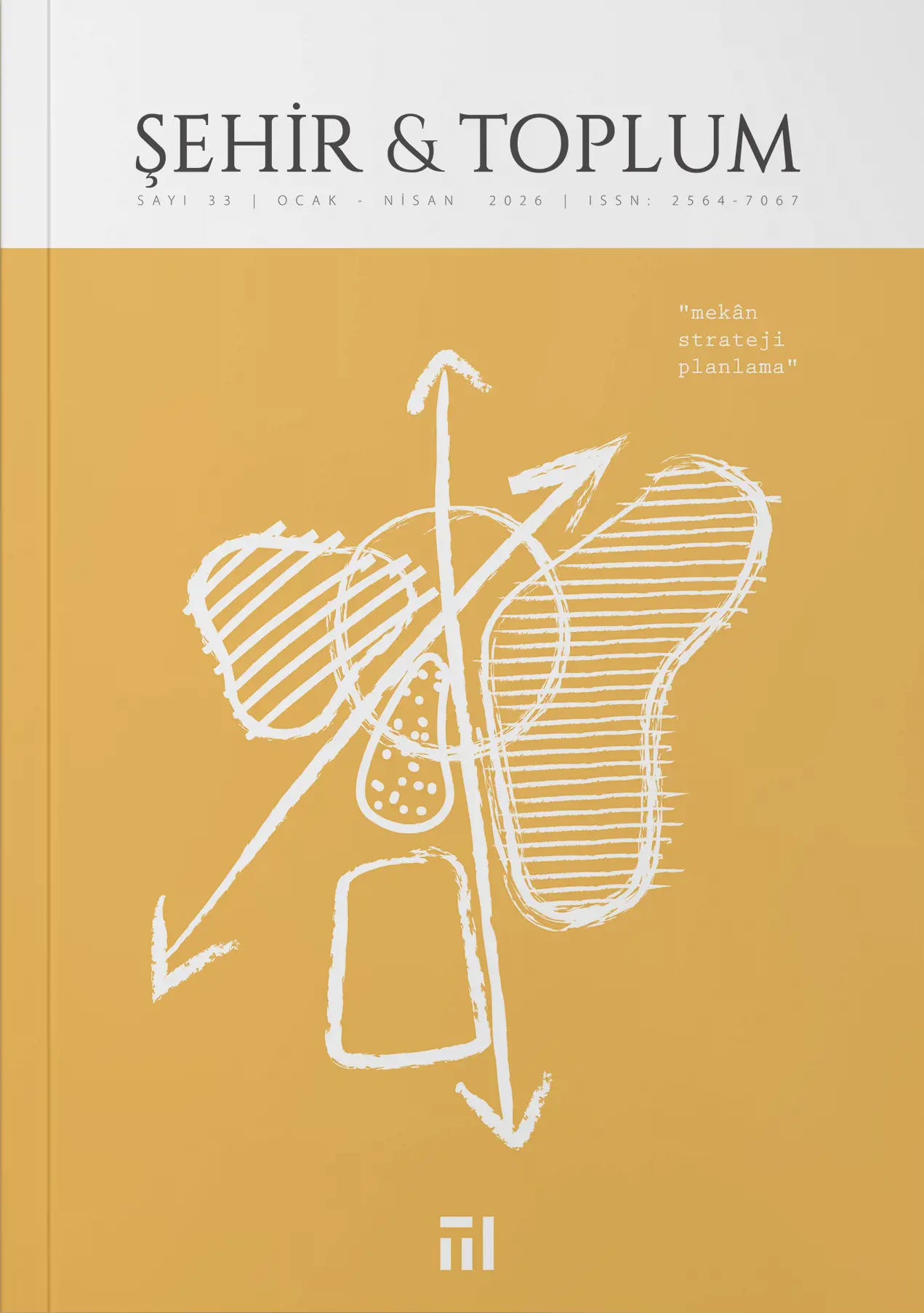
This interview that appeared in the 33rd issue of City & Society Magazine on 'Space, Strategy, Planning' was originally published in Turkish and you can read it here.
Spatial planning is no longer merely a technical activity; it has become a strategic intervention that shapes a city’s direction, rhythm, and values in the face of deepening social and ecological crises. In this conversation, we discuss the possibilities of this transformation with Paul Chatterton, who has made a significant impact on urban studies in recent years. Chatterton’s radical yet equally feasible proposals for rethinking cities offer a strong foundation for anyone seeking to approach planning from a new perspective today.
Paul Chatterton is a Professor in Urban Futures at the University of Leeds; an academic, writer and activist who questions traditional urban planning approaches and advocates for transformative systemic change. His work focuses on urgent crises surrounding cities, such as the climate crisis, social inequalities and ecological collapse. He adopts an approach that supports collaborative production and transformation processes, working with a wide range of people, from activists to policymakers, students to local communities and private sector representatives.
Over the past twenty years, he has been involved in numerous practical initiatives, ranging from anti-fossil fuel campaigns to the establishment of housing cooperatives and the organisation of climate camps. He has authored ten books and over fifty academic articles. Works such as Unlocking Sustainable Cities and How to Save the City not only offer a critical framework for the crises facing cities, but also propose concrete and actionable pathways for transformation.
Miray: I would like to start with your intellectual foundations. I came across Unlocking Sustainable Cities years ago, and the book has influenced both my professional and academic work. Your writings serve as a bridge between critical urban theory and practical, people-centred action. You bring together different practices for rethinking cities and strive to create a collective learning space from these experiences. So I would like to ask: What inspired you to start working in this field and, in particular, to write Unlocking Sustainable Cities and your more recent book, How to Save the City?
Paul Chatterton: My initial sources of inspiration came more from grassroots and local community movements. I was trying to learn about community-based management and self-organising practices; I was particularly thinking about how people could run their own affairs and manage their own lives in times of crisis. As an activist 20–30 years ago, this was what interested me most. At the same time, I was questioning the limits of the existing governance and economic systems. What could we do to achieve the transformation we desired? This led me to explore the relationship between the state and the economy, what kind of economy we wanted, and who was actually building this new society and economy. That was my starting point. I then followed many social movements in Argentina and Mexico. I spent time observing and volunteering in local communities, seeing how they built community-focused, independent structures in areas such as health, education and construction ( ).
When I returned to Britain, I encountered John Holloway’s “within-against-beyond” approach, as outlined in his book Change the State Without Taking Power. This framework acknowledges that existing institutions will not change completely in the short term, while also prompting us to consider ways of working within them, maintaining a critical distance, and creating alternative spaces for developing different models and practices. For me, this approach became an important starting point for how transformation might be possible. This threefold perspective also underpins my work on change.
Then I began to explore the question: where should we resist and where should we build alternatives? Therefore, in my book, I tried to highlight the negative aspects of our ways of life in cities through four or five key areas: housing, transport, nature, democracy and the economy. These are actually the areas that form the basis of our capacity to live well. So what should we stop? What should we resist? And then what should we create, strengthen and expand? Let’s take the issue of nature, for example. There are nature-destructive practices that view nature as a resource, approaching it as something independent of human welfare and freely consumable. Instead, how can we establish a structure that fosters a completely different relationship between humans and nature, one that prioritises a circular economy? How can we create a system where people position themselves in a completely different relationship with nature?
I was actually trying to get people to take the causes seriously and build solutions from there. Because one of the biggest problems is what we call the “knowledge-action gap.” The level of knowledge is very high, but our actions are very low. So how can we align these? Most of the time, we know how big the crisis is, but the solutions we produce do not match this seriousness. That’s why the book was actually a process of matching. If the challenge we face is truly as big as we say it is, then our solutions need to be of the same scale and seriousness. Similarly, I tried to explain that institutions, governance models and financing mechanisms also need to be reshaped in a way that is consistent with this challenge.
So what do serious solutions—what I call ‘emergency-style solutions’ in the second book—actually look like? We no longer have time for small, incremental, or narrowly focused solutions. We need transformative systemic change. This is a huge challenge for urban planners and practitioners: to start thinking about fundamentally changing the urban system.
Then the question arises: how does this transformation manifest in different areas? For me, housing is an important example. In Leeds, I developed a community project called the Lilac Housing Project, built using straw bale construction techniques. I also live in one of those houses. We built twenty straw bale houses and established a cooperative.
But the real question is: How can we scale up and spread these kinds of micro-projects? We have tremendous niche innovations at our disposal; so how do we transform these into system-level change? How do we change the financing, the institutions, the behavioural patterns, the ecosystems—in other words, all the elements of the system—and create a broader transformation?
This is what excites me most right now, because I see many people stuck with only micro-solutions; these cannot trigger large-scale system change. Moreover, we are often pushed towards limited, top-down interventions focused on consumer behaviour.
Miray: You chose to use a manifesto format for your first book. Why did you specifically choose this form, and do you think it works?
Paul: A manifesto is essentially a text based on political principles; it is political from the outset. In this respect, it sharply distinguishes itself from technocratic government reports or think tank documents, which often operate in disconnected fields and lack a political orientation. A manifesto forces us to think across systems; it positions us as holistic and integrated practitioners who must address complex and interconnected problems.
One reason I chose the manifesto form was that they serve as meeting points that bring communities together around debate. Manifestos are not an end in themselves; they are part of a journey designed to spark debate that triggers local change, provokes and disrupts familiar patterns. This is why I have received such positive feedback; because a manifesto allows you to put forward ideas that stretch to the furthest reaches of the horizon. While policy reports often confine you to the comfort zone of ‘what is currently possible’, a manifesto allows us to ask how we can rapidly advance towards an idea that seems like a goal for 20–30 years from now.
One of the fundamental functions of manifestos is that they enable collective production—that is, they create the necessary ground for discussion to produce solutions together with other stakeholders. This function is critical today because in many parts of the world, the political centre is no longer producing viable solutions; the resulting vacuum is increasingly being filled by populism. What we need is a revitalised social movement that can embrace radical yet feasible ideas that can genuinely improve life.
Miray: How do you approach the concept of strategy in your work?
Paul Chatterton: For me, strategy consists of a structure I call the “four spirals” in the book. It may sound a bit technical, but it actually refers to the four fundamental sectors that make up our society: the public sector, the private sector, the community sector, and the research sector. These four sectors have always come together in some way to produce change; there is constant communication between them. However, today, the way these four areas come together serves no purpose other than to reproduce the status quo. Therefore, the same actors need to form a completely different alliance that will break the status quo and aim to create a “new reality”.
Therefore, the public and private sectors must come together and declare: “We will no longer reproduce the existing order; we will use our resources and strategies to create a completely different reality.” This is because each contributes different and complementary elements to the process: the public sector has legal authority and policy-making power; the private sector can provide investment, employment and technical knowledge; the community sphere brings people, local resources and practical skills; and the research sector offers analytical insight and expertise. Therefore, all these actors need to sit at the same table with equal say.
Power relations need to be reorganised and all these actors need to be placed on an equal footing. Only then can they say, “We will not repeat the current order; we will do things differently now.” We can see small examples of this in some places around the world: in cities like Curitiba in Brazil, Bologna in Italy, or some cities in the Global South, we see these four areas coming together and saying, “We can do this, but we need to form a coalition that breaks away from the status quo.” I call this a “breakaway coalition,” meaning a coalition that breaks away from the existing order to forge a new path.
This cannot be achieved through the efforts of activists alone; the four sectors I mentioned must act together. This is precisely my strategy. In my second book, I present a ten-point plan containing radical ideas that such a breakaway coalition could implement.
Miray: What you’ve described makes me think that the strategic plans prepared by municipalities, the tools we use to transform, reproduce and shape urban spaces, have now evolved. Inspired by your work, I feel that the history of strategic planning is transforming into something else. For example, in Barcelona, these plans have moved beyond being mere documents and have become a kind of contract among stakeholders.
Do you think it is possible to transform planning processes, particularly for municipalities and the public sector, through your strategies and manifesto approach?
Paul Chatterton: The interesting thing is that the right people are not all in the right places; there is a fragmented structure. It’s as if we are a multi-headed hydra, with a few people in different places, but no truly critical mass in any one place. That’s why networking is so important.
Still, some elements are emerging. For example, the idea of ‘post-growth planning’ or ‘post-growth cities’ is gaining traction. Many cities are now asking, ‘What comes after growth?’ and experimenting with this.
Consequently, many people are exploring what the post-growth era means in practice using Kate Raworth’s “doughnut economy” approach. However, these are generally developed Western European cities. Take Geneva, Paris, Barcelona, Amsterdam, Stockholm, Sydney, Bristol, Vancouver... They are all drawing up doughnut economy portraits and seeking answers to the question, “How can we operate within a safe and fair space for humanity?” This is wonderful. But you would expect such things from these cities; they are high-income places with strong social capital and established institutional structures. Yes, these cities can and will reduce their social and ecological impacts…
What really interests me, however, is a broader group: the rapidly growing cities of the Global South. For example, Accra in Ghana, Kinshasa, Lagos... The rapidly exploding cities of the majority world. Lima, Mexico City, wherever. How can we support coalitions in these cities that could disrupt the global colonial development model? Because what happens there affects us too, and this is not an abstract issue. The massive emissions and consumption practices emerging in the cities of the majority world will have devastating effects on everyone— ; just as the reverse is true. So for me, the issue is developing a global mindset.
So when Amsterdam says, “We’re going to take a very different path, we’re adopting the doughnut economics approach,” we have to ask: How much will this actually transform high consumption habits in Amsterdam? How much will it reduce how much people fly, how many frequent flyers there are? So, to me, what we need is to develop a global mindset about how we affect each other. To understand that we are all in the same boat and that problems arising in one place affect everyone. High consumption, high pollution, high carbon emissions, excessive fertiliser use... All of these become global issues that concern the entire planet, and we all have to deal with them. Therefore, one of the most important lessons to be learned is that global solidarity among people is essential for a radical agenda. Rather than sharing innovations related to economic growth, sharing lessons about how we affect each other is much more vital.
Miray: In Turkey, we were always taught to look at urban planning approaches in the West, but this never really worked. We try to imitate them, but our global position and our social and cultural tools are completely different. That’s why we always feel like we’re trying to innovate in a stifled environment. We are currently in a very serious political and economic crisis, and it is becoming increasingly difficult to get things moving, to produce, to imagine something new. Five or ten years ago, most of us were building networks and developing progressive ideas. Today, there is a collective depression, and even imagining something new has become difficult. What advice would you give to policymakers, innovators, and activists working in such a repressive and restrictive environment?
Paul Chatterton: This is a really important point. Because right now, there is a serious level of physical pressure and political violence that directly prevents new ideas from emerging. In such darker times, when we don’t feel very optimistic, I believe our role is to initiate and sustain as many ‘hope projects’ as we can. Because these are the seeds of the new era that will emerge in five or ten years’ time. You mentioned that fluctuation: a more optimistic period five years ago, a more pessimistic environment today... So now, when conditions change, what can we do to gain momentum for the next five to ten years? It could be creating a policy framework; it could be supporting activists; it could be protecting some land, setting aside some resources... It could be anything related to how we can protect the small powers we have. But at the same time, keeping ideas alive and growing within civil society is an integral part of this work.
So, how can we sustain things like your magazine, these kinds of ideas? Because there are periods when these ideas rise and fall. Our task is to keep these ideas alive. That way, when conditions become favourable again, these ideas will still exist and we can grow and strengthen them. Because people have a tendency to say, “I give up”; this is very understandable and normal up to a point. But what we need to do is institutionalise hope.
It is not enough just to hope; we need to create institutions that will sustain hope. That is, structures that institutionalise hope... These institutions can take many forms: policy documents, social centres, meeting places, gatherings... As long as we keep saying what we need , those ideas won’t disappear. They won’t become controversial or extreme. Because if we stop saying them, those in power will fill that void with their own discourse. That’s why the issue is being able to preserve hope even in the dark.
Miray: What was the most inspiring local action or transformation example for you?
Paul Chatterton: I think it might be what I saw years ago in Argentina, in the piquetero movement following the 2003 financial crisis. At that time, people began rebuilding the urban fabric with their own hands. By establishing social centres, running occupied factories, organising street protests... They used the void created by urban collapse to show that alternatives were possible. That was truly exciting.
In these moments of collapse and abandonment, how can we use what we have to truly demonstrate an alternative way of life? That is an extremely exciting question for me. To give a more recent example, I have just returned from Ghana, where I spent a week working with some community activists in Accra. The scale of the challenges there is completely different from the minority world in Europe: very high levels of pollution, widespread shanty towns, completely informal economies, problems accessing clean water...
But what really struck me were the lessons from Pan-African organising. Because I was hosted by Pan-Africanist youth organisations there. Their core message, the most critical message in terms of decolonisation, is this: they want to embark on a process of self-liberation. This means we must accompany them as “allies”. The key point here is to allow them to build their own power structures. This way, they can steer their own development journey.
And we, the “Westerners,” must truly let go of them, withdraw from their lands. Just as you said about Turkey or other places: People have the right to produce their own solutions to their own problems. We just need to eliminate the structural conditions that hinder this right, especially debt and unequal trade relations. One of the most important lessons to be learned about solidarity is to do our homework where we live, to see our impact on other parts of the world, and to say this: we must respect the right of people living in colonised parts of the world to determine their own future. They have the right to solve their own problems, and they can do so, provided we lift the burden from their shoulders, cancel their debts, and engage in a serious discussion about reparations. Because people want to produce their own solutions. They want to shape their own journeys. As long as we are the main obstacle to this, nothing will change.
Miray: I would like to share an example we are working on in Istanbul. There is a historic garden, Piyalepaşa Bostanı, which has been used with the same agricultural techniques for about 600 years. When the municipality wanted to turn it into a car park at one point, neighbourhood organisations, grassroots movements and cultural heritage groups protected the area.
Now, an alliance has been formed between the family working in this garden, neighbourhood organisations, and heritage institutions. In order for this area to continue agricultural production and also serve as a public space, an ecological learning area, and a place for collective production, a “joint management” model is being negotiated with the municipality, with the Istanbul City Council acting as a mediator. We have prepared guiding principles and are working to institutionalise this partnership. Such initiatives are becoming increasingly rare, but we are determined to sustain this example.
My question is this: How do you assess these small-scale, community-based co-management models? Do you think they can become meaningful strategic tools for transforming cities in such difficult political and economic conditions?
Paul Chatterton: It is crucial to show people that “this can be done.” This example is particularly valuable precisely because it does two things simultaneously. On the one hand, you are not just dealing with the food issue, but simultaneously with many issues such as food, housing, agriculture and sustainable living. So there is a multi-layered structure, and at the same time you are involving different stakeholders in the process. That is why it is a real system transformation project, and that is what is exciting about it.
It also rebalances power dynamics at the local level, as you make demands of the municipality and alter the power relationships there. This is precisely what such projects should do: shift the discussion from “managing public resources” to the concept of commons. Whether it’s food commons or life commons... It demonstrates that these can be managed by the community.
Because what local governments are doing right now is selling public assets. And as they are sold, nothing remains. Probably the same in Turkey, right? Constant selling, selling, selling... And this is happening at an incredible pace. When nothing is left, there is nothing left. In other words, all assets are gradually turning into private property controlled by only 1% of the population, who are not interested in social services that serve the public good. This is a serious problem. Because then we have no resources left to manage crises.
Miray: What path would you recommend to urban planners who want to do transformative work for the future?
Paul Chatterton: First of all, I think it starts like this: think big, start small, and start now. We need comprehensive discussions about the problems we are going through, yes, but often we get stuck in those discussions. Everything feels too heavy.
That’s why we need to experiment. Right now, without delay. Whether it’s taking ownership of a piece of land, designing a policy, or entering into dialogue with the council... We need to take action without hesitation. Start small and make a concrete intervention. Because people find hope in examples. When we have something to show, our social networks also grow stronger.
This is exactly what we need: Hope springs not from words, but from tangible examples. From things that make you say, “Look, someone tried it and found another way.”
That’s why the most critical thing for me is to establish a recurring cycle: try, learn, try again, learn again. And to do this without delay. Because we need thousands of small experiences. Some will develop, some won’t, but what matters is that these attempts are made.
Ready to Make Change?
After three decades of research and activism, I'm always looking for partners who want to create sustainable, just, and resilient futures.
Start a Conversation →