The power of Public-Civic Partnerships (PCPs)
How cities can shift from austerity and unlock fairer, greener and more resilient communities
With my colleagues Marie‑Avril Berthet, Pete Tatham and Rebecca Brunk, and supported by Policy Leeds, we have been exploring how public assets— shared land, buildings and community spaces—can be managed differently to better support Leeds’ long‑term ambitions. We outline in our new report why Public‑Civic Partnerships (PCPs) offer a forward‑looking and practical alternative to traditional models of asset management, and how they can help the city navigate ongoing financial pressures while strengthening local democracy, community capacity and long‑term resilience.
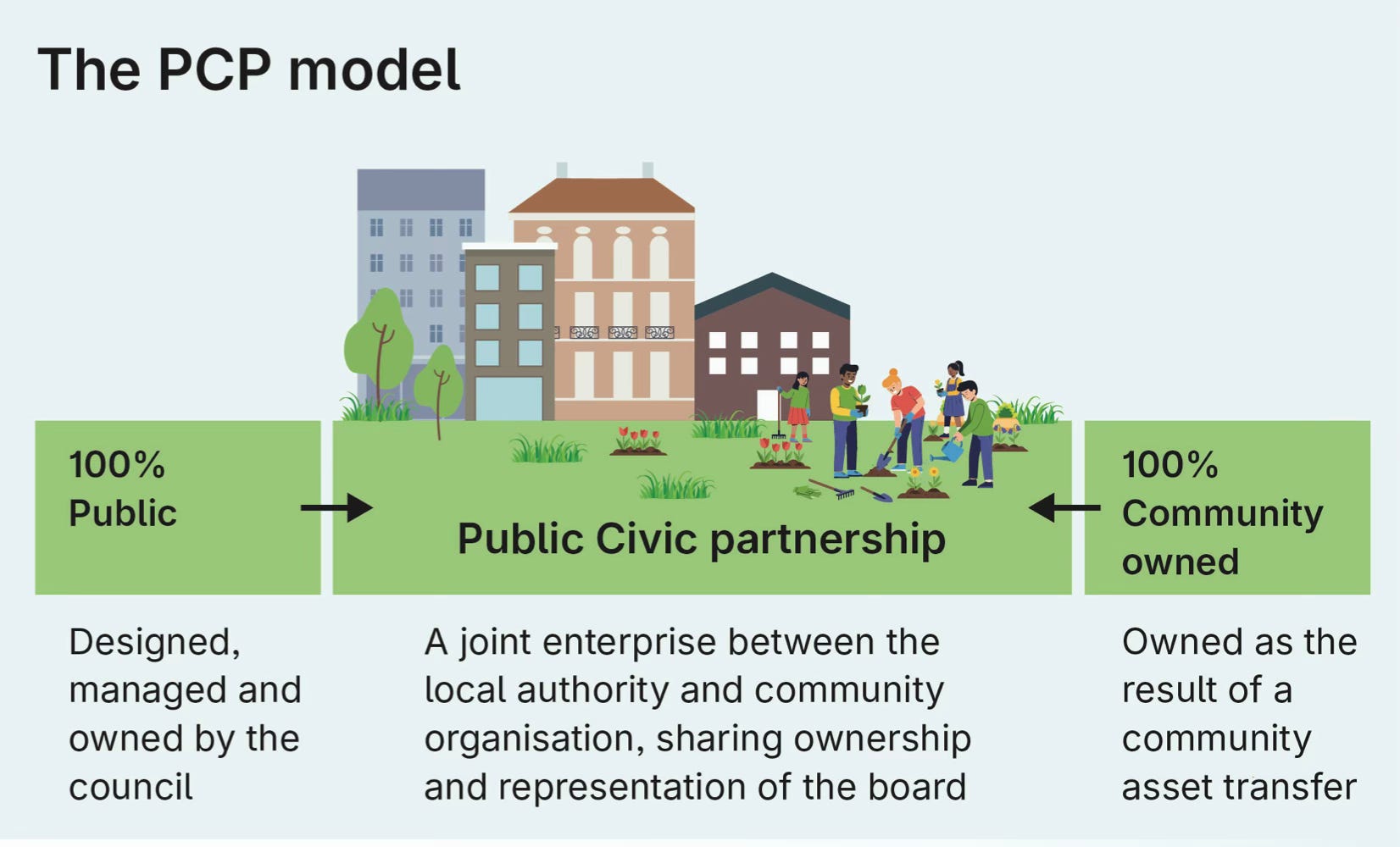
PCPs create a framework in which the council and community organisations co‑create, co‑manage and sometimes co‑own public assets. This represents a major shift from existing Community Asset Transfers (CATs), which typically only consider community involvement when an asset is surplus or difficult to sell. PCPs instead encourage a more proactive and collaborative mindset: involving communities early, aligning use of assets with citywide priorities, and unlocking forms of social and environmental value that simple disposal cannot achieve.
Our research highlights that a reliance on selling public land and buildings to fill budget gaps poses long-term risks to the city’s civic infrastructure. At the same time, Leeds is home to an array of community groups eager to contribute to climate action, food growing, wellbeing, nature recovery and inclusive neighbourhoods. PCPs provide a route for these groups to shape the places they care about, and a way for the council to support creativity and innovation even in a time of fiscal constraint.
To ground the model in real practice, we examined examples from across the UK. Plymouth Energy Community demonstrates how shared governance can create community-owned renewable energy schemes that cut emissions, address fuel poverty and reinvest profits locally. Northern Roots in Oldham shows how an ambitious eco‑park can combine biodiversity, skills development and green enterprise. Leeds itself has several emerging PCP‑style projects—from Cross Green Growing Together to Seacroft Forest Garden and the Imagine Leeds climate hub—that illustrate how unused or overlooked spaces can become valued community assets when collaborative models are embraced.
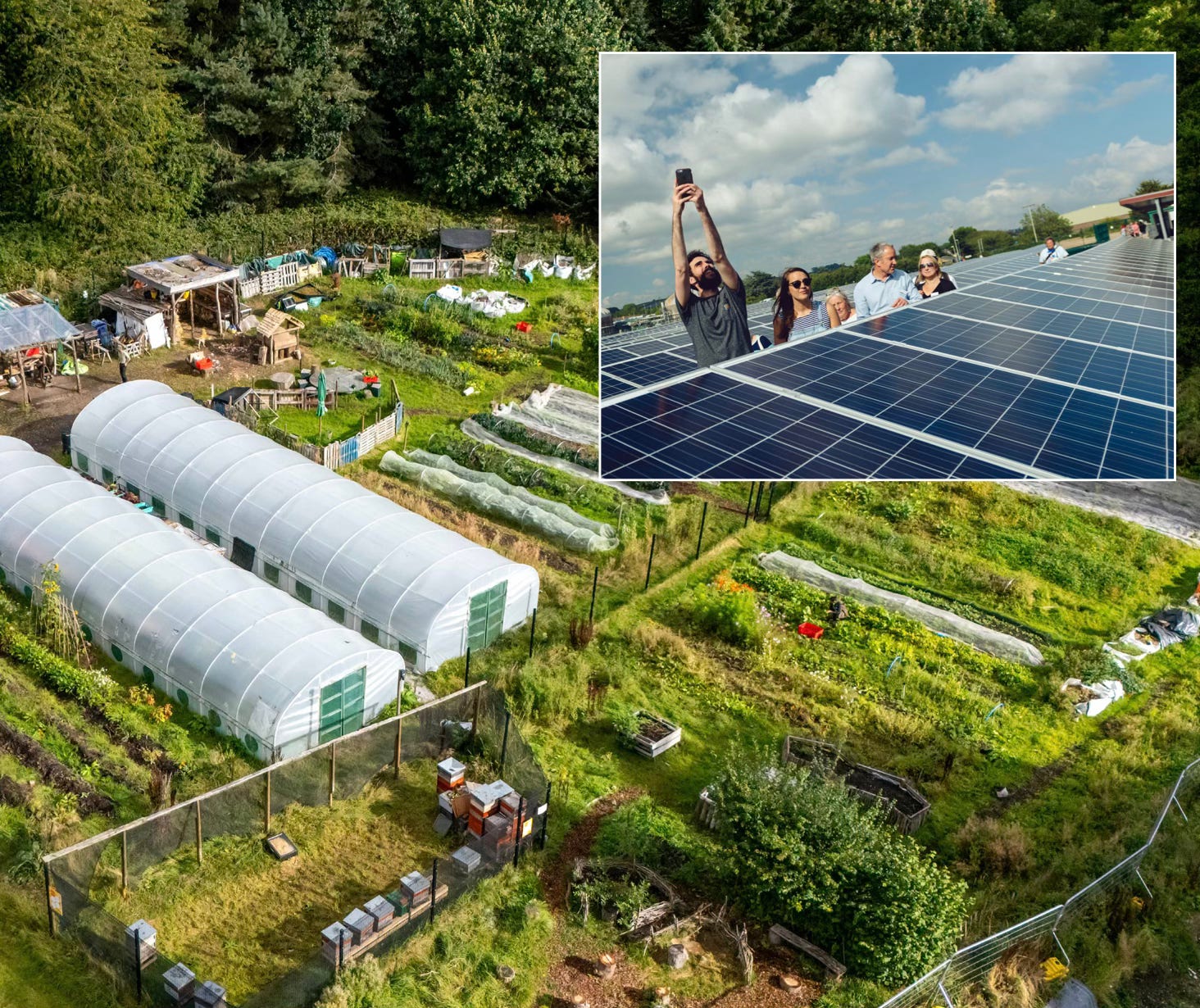
Across our conversations with third-sector organisations and council officers, several themes consistently came up. PCPs can relieve pressure on overstretched public budgets while ensuring assets remain in public stewardship. They can improve trust and communication between communities and the local state, helping residents feel a sense of ownership over the city’s future. And they unlock the skills, passions and lived experience of local people—something increasingly vital in tackling climate, health and social inequalities.
To help Leeds take steps toward this PCP model, our report sets out four core recommendations:
Develop a meanwhile‑use approach for disused land and buildings. Create a clear route for civic and community groups to temporarily use vacant assets awaiting redevelopment or disposal, allowing social and environmental value to flourish during in-between periods.
Standardise leases and licences across the Council Simplify and streamline partnership processes so that community groups face a clearer, quicker and more transparent route to working with Leeds City Council. We have already created a community facing guide that can be found here.
Create a formal PCP framework Leeds City Council undertakes a consultation to assess the use and viability of longer-term PCPs, and ultimately develops a citywide policy that sets out what shared stewardship could look like.
Trial PCPs through the Team Leeds approach Pilot the model using Leeds’ strong ecosystem of civic organisations and climate action groups, allowing learning, refinement and scaling.
Implemented together, these steps could help Leeds preserve its public estate, support community-led initiatives and build the collaborative infrastructure required for a resilient future. Ultimately, we hope our work encourages wider debate about the future of public assets in Leeds. PCPs offer more than a new management framework—they offer a chance to reimagine how councils and communities work together, strengthening the civic fabric of the city and supporting communities to thrive.
To cite this policy report, please reference: Berthet, M.A., Chatterton, P., Tatham, P., Brunk, R. (2025) Developing public-civic partnerships: A new model to support the Leeds Ambitions. Report no. 1, Policy Leeds, University of Leeds. https://doi.org/10.48785/100/410
Ready to Make Change?
After three decades of research and activism, I'm always looking for partners who want to create sustainable, just, and resilient futures.
Start a Conversation →