What Keir Starmer's speech could have said after the 2026 local elections
A fictional speech based on radical, but entirely feasible, evidence based ideas.
Let’s stop avoiding the obvious. The crisis we face is not one of confidence, messaging, tone, or unity. It is a crisis produced by our political and economic system that continues to defend an unjust way of governing that has stopped working for the majority of people. This is not about the survival of leaders or parties, or about restoring trust through better management. The status quo is finished, and managing it better will not save it. We need a complete change of approach.
The real crisis is about who has power. Every major challenge we face - housing, transport, the cost of living, climate breakdown, democratic exhaustion - has the same root cause: power has been concentrated upward and outward, away from everyday life. People are not disengaged because they are apathetic; they are disengaged because they have been locked out of meaningful control over what makes a good life. This is a democratic failure that goes deeper than electoral turnout. When democracy is reduced to a vote every few years and decisions about land, infrastructure, energy, and the future are made elsewhere, it has stopped working.
Our institutions reflect this dysfunction. First‑past‑the‑post systematically distorts political reality and silences millions of votes, as extensively documented by the Electoral Reform Society. An unelected second chamber appointed by patronage lacks democratic legitimacy, a point raised repeatedly by constitutional scholars and parliamentary committees. Meanwhile, extreme centralisation has stripped towns, cities, and regions of the power to shape their own futures, leaving them responsible for managing crisis without resources. The answer is not tinkering around the edges, but a democratic reset.
That reset would begin with proportional representation, a reform supported by nearly half of the UK population according to YouGov polling. It would mean abolishing the appointed second chamber and replacing it with a democratic institution rooted in rotating citizens’ assemblies, drawing on models already tested through Climate Assembly UK and analysed by the Institute for Government. These assemblies would be permanent, randomly selected, paid, and properly supported — not symbolic consultations, but bodies with real authority over long‑term decisions on climate, infrastructure, care, and land use. Democracy would cease to be something done to people and become something people actively participate in.
This democratic failure is also visible in our places. Towns and cities have been hollowed out and reshaped by property speculation, luxury consumption, and long commutes, all sold as progress. In reality, this model has produced congestion, pollution, inequality, and social decay while draining everyday life of meaning and control. The alternatives are not abstract or unrealistic. They are already being implemented in cities around the world through the idea of 15‑minute towns and cities, popularised by Carlos Moreno.
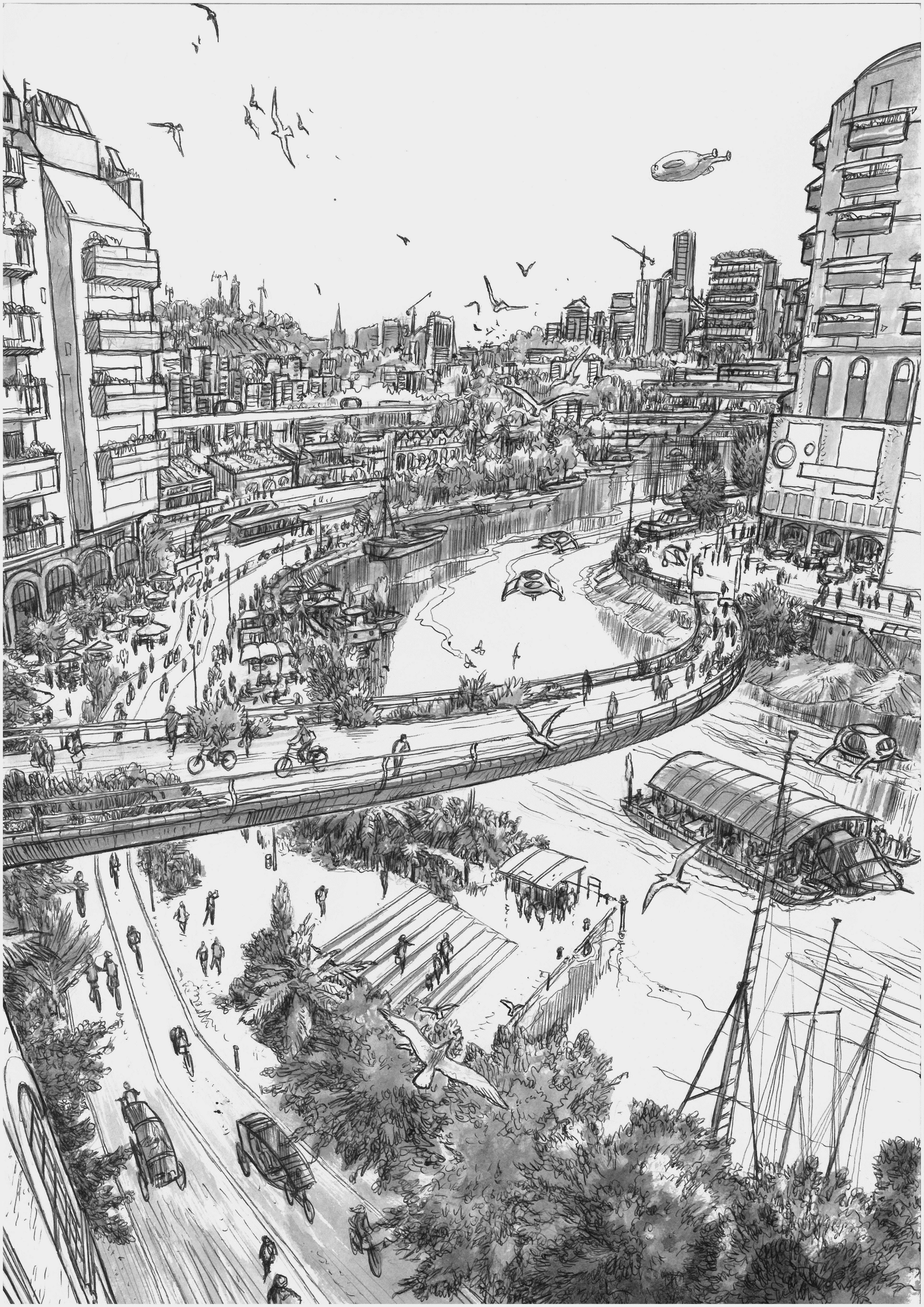
A 15‑minute city means homes, work, education, care, shops, and green space located close together. It requires frequent, affordable, publicly owned public transport, walking and cycling treated as core infrastructure, and streets designed for safety, access, and social life rather than traffic speed. Far from restricting freedom, evidence shows it expands choice and reduces forced travel.
This is not culture‑war provocation. It is about whether people can live decent lives without burning time, money, and carbon simply to exist. Delivering it means public ownership of rail and bus services, a process already underway through Great British Railways. It means major investment in cycling networks and safe streets, alongside a nationwide Vision Zero strategy — pioneered in Sweden and proven internationally — that treats road deaths as preventable.
Housing must also sit at the centre of any serious response. The problem is not a lack of units but a lack of secure, affordable homes. That means ending corporate land banking and taking land out of speculation through community land trusts. It means a mass programme of green social and self‑build housing, street‑by‑street retrofitting, rent controls, limits on second homes, and a clear rejection of housing as a financial asset rather than a social good.
Renewing democracy means tackling extreme wealth inequality. That requires serious debate about wealth taxation, land value taxation, and reform of inheritance loopholes, as explored by the independent Wealth Tax Commission at the LSE.
Revenues must flow directly into a national programme of renewal: care services, hospitals, schools, youth and play facilities, and local services hollowed out over decades. They should help fund universal basic income pilots, minimum free quotas for housing, energy, and transport, and dignified, welcoming facilities for migrants in communities across the UK.
Finally, the government must acknowledge that the climate and nature emergency demands system change. It cannot be addressed through nudges or targets while the economic model driving extraction remains intact. What is required is mass public investment, public and community ownership of energy, and a deliberate shift towards an economy organised around care, repair, and sufficiency. That means replacing GDP with frameworks like Doughnut Economics, now being tested by cities and governments worldwide and developed by the Doughnut Economics Action Lab.
The choice facing politics is no longer between moderation and radicalism. It is whether to commit to redistributing power, democratising ownership, and rebuilding the infrastructures of everyday life.
Ready to Make Change?
After three decades of research and activism, I'm always looking for partners who want to create sustainable, just, and resilient futures.
Start a Conversation →